
Have you ever noticed that after certain meals, training goes well, and after others, everything feels heavier? It’s not a question of motivation. It’s a question of fuel. Sports nutrition isn’t just about eating “healthy”: it’s about providing the right nutrients at the right time so that the body responds to the effort required.
Caffeine and Sports Performance: An Underutilized Lever
Caffeine is the subject of solid publications in sports nutrition, but it is rarely integrated into the dietary strategies of practitioners. According to a publication shared by Meltonic and based on the International Society of Sports Nutrition (ISSN), doses of 3 to 6 mg per kg of body weight improve endurance performance.
For a person weighing 70 kg, this corresponds to one or two espressos. The peak effect occurs 45 to 60 minutes after ingestion. For long efforts, splitting the intake (50 to 100 mg every two to three hours) helps maintain the effect without overloading the digestive system.
A often overlooked point: individual tolerance. Testing caffeine during training before using it in competition avoids unpleasant surprises (digestive issues, increased heart rate). It is an effective supplement, provided it is calibrated. To deepen your knowledge about the links between diet and exercise, the nutrition page of Sport et Form details several strategies tailored to different athlete profiles.
Carbohydrates Before Exercise: Overcoming the Fear of Sugar
In recent years, low-carbohydrate diets have gained popularity. When applied to sports, they pose a concrete problem. Carbohydrates are the most quickly mobilizable energy source during intense exercise. Reducing them means asking the body to run on low fuel.
Have you ever felt a “wall” during exertion, that brutal feeling of emptiness? It’s the physical manifestation of depleted glycogen stores. Replenishing glycogen stores before training directly conditions the possible intensity.
Which Carbohydrates to Choose Depending on Timing
Three hours before exertion, prioritize slow-digesting carbohydrates: brown rice, oatmeal, sweet potatoes. They release their energy gradually.
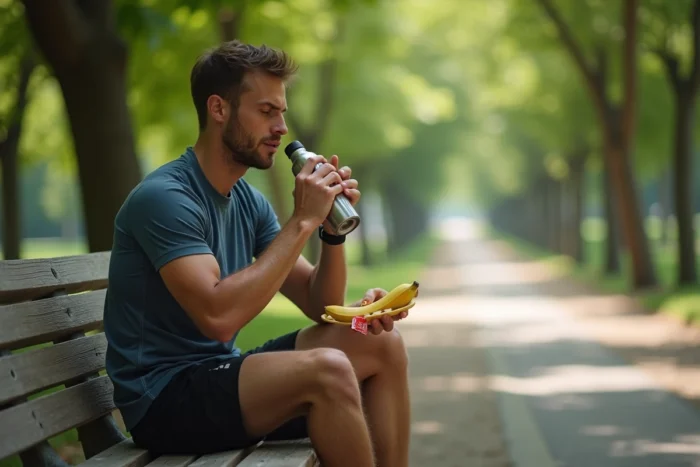
In the 30 to 45 minutes leading up to exercise, a simpler intake works better: a banana, applesauce, a cereal bar. The goal is not to fill the stomach but to top off reserves without burdening digestion.
- Main meal (3 hours before): rice, whole pasta, or oats, paired with a source of lean protein and some cooked vegetables
- Proximity snack (30-45 min before): ripe fruit, unsweetened applesauce, or a light energy bar
- During long efforts (beyond an hour): isotonic carbohydrate drink or gel, in small regular intakes
A meal too rich in fiber or fat right before exertion slows gastric emptying and can cause digestive issues. The digestive system redirects blood flow to the active muscles, which reduces its ability to process a complex meal.
Proteins and Muscle Recovery After Exercise
After intense exertion, muscle fibers exhibit micro-tears. This is normal, and it’s even what triggers adaptation (the muscle rebuilds stronger). But this rebuilding requires an intake of amino acids, the building blocks of proteins.
Consuming protein within two hours after exercise accelerates muscle recovery. No need for an immediate protein shake: a complete meal containing chicken, fish, eggs, or legumes does the job.
Combining Proteins and Carbohydrates After Effort
Recovery isn’t solely about proteins. Combining carbohydrates and proteins in the post-training meal allows for both glycogen replenishment and the provision of necessary amino acids for repair.
A simple example: a bowl of rice with chicken and vegetables. Or a plain yogurt with oats and a fruit. The carbohydrate-protein combination after exertion is more effective than either taken alone.

Hydration and Sports Nutrition: Beyond Still Water
Drinking water remains fundamental, but during prolonged exertion, water alone is not enough. Sweating causes the loss of electrolytes (sodium, potassium, magnesium) that are involved in muscle contraction and nerve regulation.
Why do some athletes experience cramps at the end of exertion despite regular hydration? Often because the water consumed does not compensate for mineral losses. An isotonic drink compensates for water and electrolyte losses simultaneously.
- Before exertion: drink regularly in the hours leading up, without excess (overhydration dilutes blood sodium)
- During exertion (beyond 45 minutes): alternate water and a drink containing electrolytes, in small sips every 15 to 20 minutes
- After exertion: compensate for losses with a mineral-rich drink or a meal containing salt and vegetables
Hybrid training formats, such as Hyrox or sessions combining running and strength training, add a challenge: the effort is fragmented, the heart rate varies, and hydration management must adapt to these changes. More frequent sips during transition phases between exercises help maintain balance.
Adapting your diet to your sporting practice doesn’t require a complete upheaval of your habits. It involves targeted adjustments: the right type of carbohydrates before exertion, proteins afterward, hydration that goes beyond just water. Every meal around training is an opportunity to prepare or repair the body, not a secondary detail.