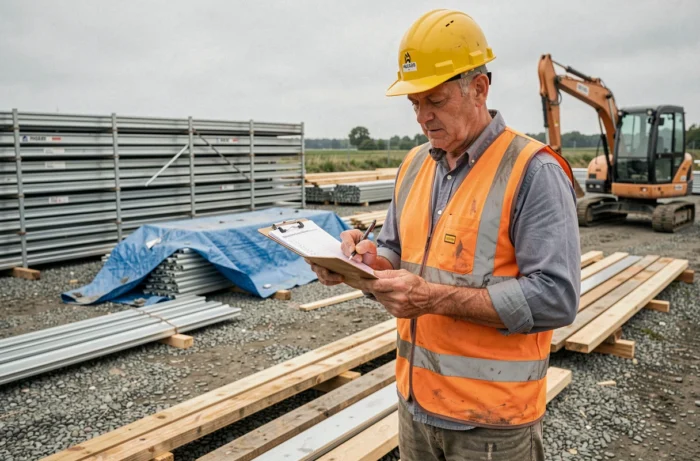
On a a construction site, the last week rarely resembles the previous ones. Teams speed up the finishing touches, dumpsters fill up, and pressure mounts to clear the area on time. However, the site closure concentrates a significant share of incidents: falls in poorly cleared areas, forgotten materials, non-compliant waste deposits. Preparing this phase with the same rigor as the installation avoids costly rework and lingering disputes.
Waste sorting on site: what the REP sector requires for closure
Closure often begins with the dumpsters, and that’s where it gets tricky. With the obligation to sort construction waste at the source, the logic has changed: sorted waste can be picked up at no cost through a collection point partnered with the building REP sector. In practice, this means that you can no longer mix everything in a single dumpster at the end of the project.
However, the regulatory framework has recently changed. A state moratorium in March 2025 froze several provisions of the free pickup specifications. The conditions for coverage therefore vary from one eco-organization to another, and it is necessary to check before closure if the planned collection point still accepts the same streams. To understand the definition of site closure as a whole, this waste dimension has become a mandatory checkpoint.
Specifically, we anticipate by placing separate dumpsters (wood, plaster, metals, non-hazardous mixed waste) at least two days before the end of the work. Waiting until the last day to sort exposes you to a refusal at the collection point and additional processing fees.
OPR and reserve lifting: the schedule that conditions closure
Closure is not limited to the physical cleaning of the site. In public contracts, the administrative sequence is precise and often underestimated by field teams.
Pre-reception operations
The OPR starts after the completion notice is sent by the company. The project owner organizes a contradictory visit, during which each non-conformity is recorded. The site manager should prepare their own checklist in advance: it is easier to spot a finishing defect when you are looking for it yourself before the official visit.
Formalizing the lifting of reserves in writing
A reserve lifted but not documented in writing leaves the file legally open. Even if the rework has been completed, the absence of a signed document prevents the administrative closure of the site. The project owner decides within a defined timeframe, with written formalization of the reserves and their lifting.
On this point, feedback varies according to project owners: some accept a simple exchange of emails, while others require a signed minutes of reserve lifting on site. It is better to clarify the expected format right from the preparation phase of the closure.
Safety during site closure: the specific risks of this phase
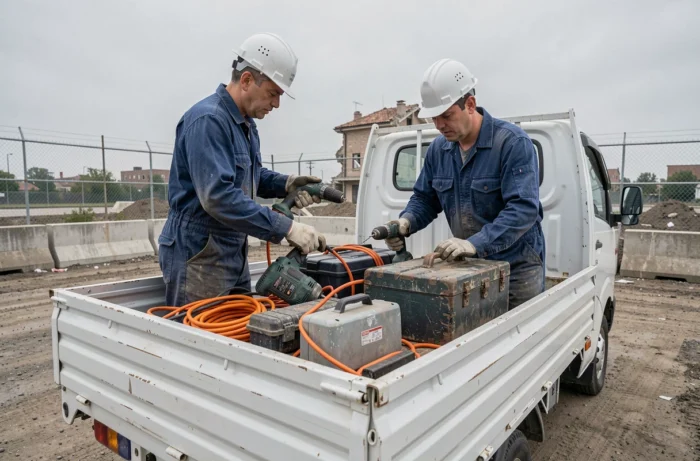
The closure phase concentrates specific accident-prone situations. Collective protections (guardrails, signage) are sometimes taken down too early, while workers are still moving around the area. The equipment being evacuated creates obstacles on the ground.
- Maintain signage and collective protections until the complete evacuation of the last worker, not just until the end of productive work
- Ensure that temporary networks (electricity, water) are actually cut off and locked out before dismantling the site installations
- Conduct a complete site tour after loading the trucks to identify any oversights: fallen materials, chemicals, cables on the ground
The “five-minute stop” at the end of the site is a simple practice that reduces incidents. Everything stops, the area is inspected together, and then dismantling resumes. It takes five minutes and prevents an accident in the last hour.
Restoring the area: returning the site to its original state
The principle is clear: the work area is returned to the condition in which it was found. In practice, this is the source of the majority of post-project disputes. An oil-stained floor, a lawn crushed by machinery, a visit hatch blocked by debris is enough to halt acceptance.
Photographing the state of the site before installation and before restoration provides the best protection. These time-stamped photos serve as evidence in case of disputes. They are archived with the project file, not in the project manager’s phone.
End-of-site cleaning: beyond just a sweep
End-of-site cleaning is not limited to the structural work. Woodwork, technical floors, and ventilation ducts accumulate construction dust that compromises commissioning. In a new building, a multi-pass cleaning (dusting, washing, finishing) is often necessary.
- Use an industrial vacuum in the technical ducts and false ceilings before installing the final filters
- Clean the windows and exterior woodwork, often overlooked even though they are the first things the client sees
- Remove labels, protective films, and adhesive tapes that remain stuck on new equipment
Managing the closure schedule: anticipating the last week
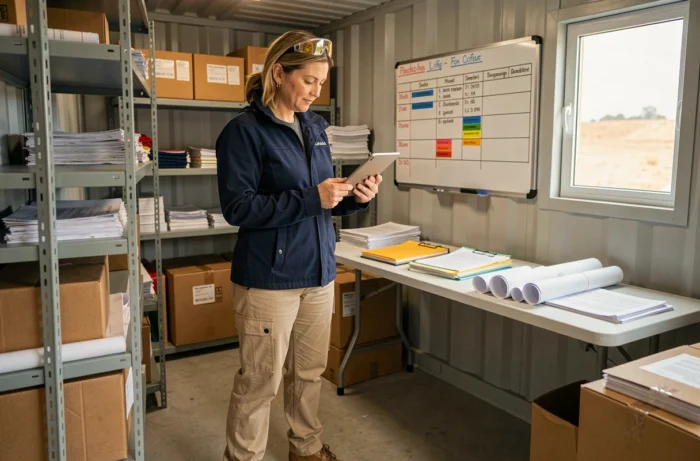
Closure is planned as a task in its own right within the overall schedule. A realistic duration is assigned (rarely less than two days on a medium-sized site), identified human resources, and a designated responsible person.
Integrating closure into the schedule from the preparation phase avoids the classic scenario where the team discovers that three dumpsters remain to be evacuated, a minutes to be signed, and a complete cleaning to be done, all in half a day. The site manager who schedules the closure in advance negotiates their dumpster slots, books the cleaning company, and informs the project owner of the visit date.
A well-managed closure goes unnoticed. The site is clean, the waste has been disposed of in the right channels, and the administrative file is complete. It is precisely because it goes unnoticed when successful that it tends to be underestimated in the preparation.