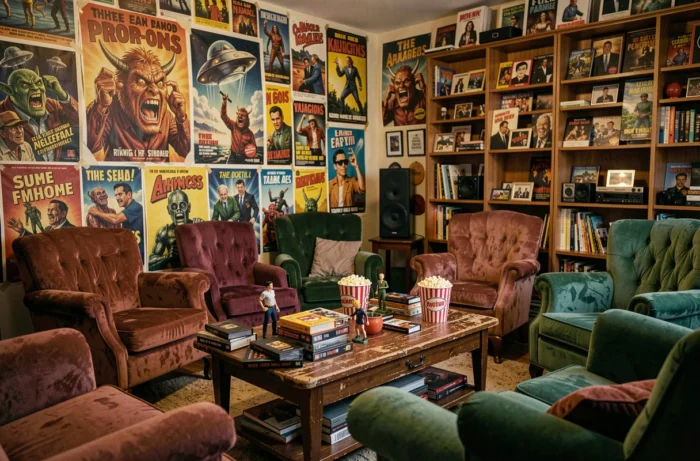
A film shot in just a few days, with a tiny budget, makeshift special effects, and a plot that defies all logic: this is the typical portrait of a Z movie. This quirky cinema, often mocked, has nonetheless spawned a passionate community and cult works. Understanding what distinguishes Z movies from other categories allows us to grasp why this genre endures through time and trends.
Z Movies and B Movies: A Technical Rather Than Qualitative Boundary
Have you ever seen a film where the rubber monster falls apart in the middle of an action scene? This kind of detail is a typical marker of Z movies, but it is not enough to define them.
B movies historically refer to films produced with a modest budget, intended to complement double features in American theaters starting in the 1930s. These productions were still framed by studios, with professional teams and an organized distribution circuit.
Z movies begin where B movies lose all safety net. No studio, no guaranteed distributor, sometimes no finalized script before filming. The director often wears multiple hats: producer, screenwriter, editor, and even actor. The budget is counted in a few thousand euros, financed out of pocket or by friends.
This distinction is technical before it is aesthetic. A B movie can be very successful (some horror films by Roger Corman have become classics). A Z movie, on the other hand, bears the visible traces of its constraints: recycled sets, approximate dubbing, missing continuity. It is precisely this fragility that gives it its charm among enthusiasts and fuels entire catalogs on platforms like serie-z.fr where these films find a loyal audience.
Ed Wood and the Pioneers of Low-Budget Cinema
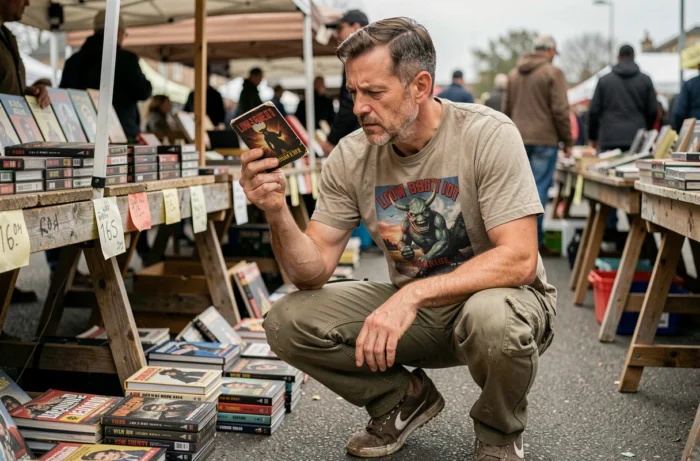
Talking about Z movies without mentioning Ed Wood would be to overlook the founding figure of the genre. This American director, active in the 1950s, is often presented as the worst filmmaker in the history of cinema. The label is reductive.
His film Plan 9 from Outer Space, released in 1959, mixes science fiction, horror, and anti-nuclear discourse with almost nonexistent means. The flying saucers are cardboard plates filmed against a black background. Night scenes alternate with shots filmed in broad daylight without coherence. The lead actor, Bela Lugosi, died during filming, replaced by an extra who hides his face behind a cape.
Plan 9 from Outer Space has become an object of study as much as an object of mockery. Scholars see it as an example of outsider cinema, produced outside any industrial system. Ed Wood shot with total conviction, convinced he was creating important works. This sincerity pierces the screen and explains why his films continue to be shown at festivals and special screenings.
Why Z Movies Still Attract a Loyal Audience
Watching a bad movie is not an act of masochism. It rests on a specific pleasure, halfway between involuntary laughter and admiration for resourcefulness.
Three factors explain this loyalty:
- The gap between ambition and means produces surreal scenes that even a seasoned screenwriter would not imagine. A stuffed shark attacking a character in a bathtub creates a unique cinematic moment.
- Collective viewing transforms each screening into a social event. Bad movie screenings operate on the same principle as The Rocky Horror Picture Show: the audience comments, reacts, participates.
- Z movies offer an entry point into the making of cinema. When the seams are visible, we better understand how a film is constructed, edited, and sound-designed. It’s a learning experience through error, accessible to all.
This audience is not limited to ironic cinephiles. Recognized directors, like Tim Burton, have expressed their affection for this cinema. Burton even dedicated a film to Ed Wood in 1994, helping to bring Z movies to a wider audience beyond its original circle.
The Role of Video Format in Distribution
The VHS tape, followed by DVD and streaming, has played a crucial role in the survival of Z movies. Without home video, most of these films would have disappeared. They had never benefited from a theatrical release or had only been shown for a few days.
The VHS market in the 1980s allowed completely obscure productions to circulate in video rental stores. The eye-catching covers, often more elaborately designed than the films themselves, attracted the curious. This parallel circuit created a culture of bad movies long before the internet took over.
Shooting a Z Movie Today: Constraints and Easements
Digital tools have transformed production conditions. A smartphone shoots in high definition, free software allows for editing and visual effects, and online distribution platforms eliminate the need for a distributor. The entry cost to make a film has never been lower.
The CNC has also simplified some aid procedures. A deliberation from July 2026 reduces the financial latency time for starting low-budget projects, which practically facilitates the launch of very low-budget productions.
But technical ease does not guarantee the interest of the result. What made old Z movies endearing was the combination of sincere ambition and meager means. A film deliberately shot “badly” to imitate the genre loses that authenticity. The charm of Z movies lies in the accident, not in the calculation.
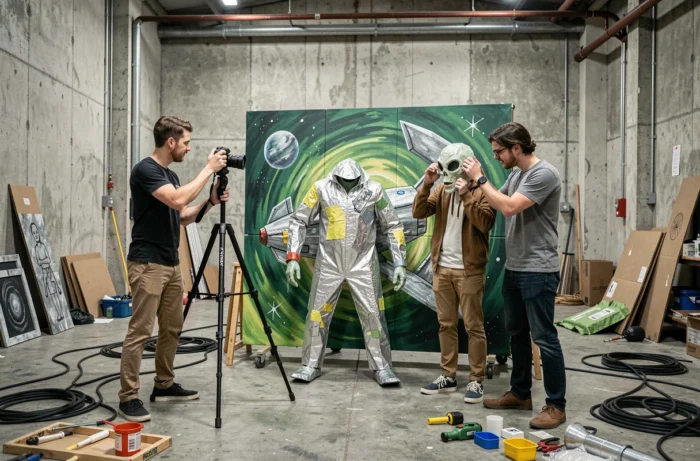
The most successful contemporary productions in this genre are those that pursue a personal project, without trying to replicate the codes of bad movies. A director shooting their science fiction film in their backyard with three friends and a homemade costume perpetuates the spirit of Ed Wood far more than one who piles on the winks.
Z movies remain a space of total freedom in an increasingly standardized cinematic landscape. No reading committee, no format constraints, no market study. Just a camera, an idea, and the desire to shoot. This may be the most honest definition of independent cinema.