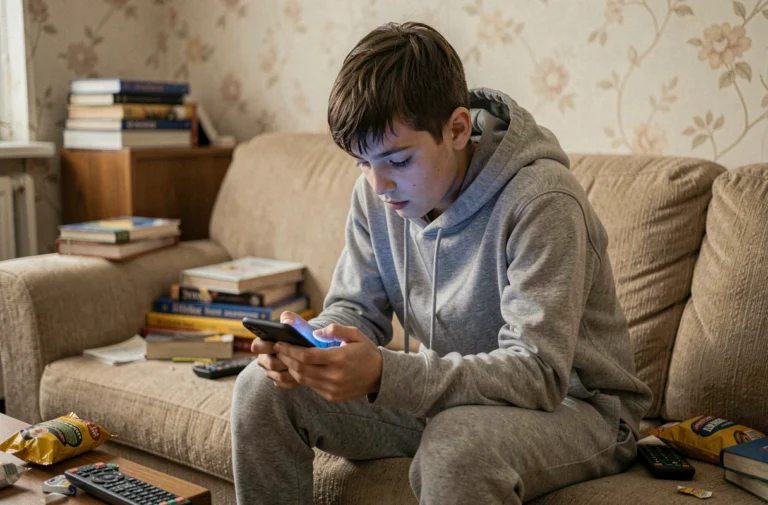
You wake up with a sore throat, a bit of a fever, and the antigen test shows two lines. The first question that comes to mind: how long will you remain contagious, and what can you do to protect those around you? The answers have changed since the early waves. With the Omicron subvariants circulating in 2026, the incubation period, contagious phase, and isolation rules are no longer the same as in 2020.
Covid Incubation in 2026: Why It Has Shortened
Incubation is the time between when the virus enters your body and the appearance of the first symptoms. With the Alpha variants, this period was around 5 days. Since the arrival of Omicron and its subvariants (including NB.1.8.1), the incubation period is between 2 and 5 days.
This shortening has a direct practical consequence. After a risky contact, the monitoring window is now focused on 5 days instead of the 10 to 14 days recommended at the beginning of the pandemic. If no symptoms appear after 5 days, the likelihood of developing the disease becomes very low.
To better understand the duration of covid contagion in 2026, it is essential to clearly distinguish between incubation and contagiousness, two concepts that are still often confused.
Covid Contagiousness: The Silent Phase Before Symptoms
You can transmit the virus even before you feel sick. Contagiousness begins about 48 hours before the first signs. This is why Covid spreads so easily: by the time you cough for the first time, you may have already infected loved ones during a meal the night before.

Once symptoms are established, the viral load remains high during the first few days, then gradually declines. For most vaccinated and healthy individuals, contagiousness lasts between 5 and 7 days after the onset of symptoms.
Be careful not to confuse a positive PCR test with active contagiousness. The PCR can detect fragments of the virus for several weeks, well after the contagious period has ended. The antigen test better reflects the presence of virus capable of transmission.
Immunocompromised Individuals: A Special Case
For individuals with weakened immune systems (immunosuppressive treatment, chemotherapy, transplant), contagiousness can last up to 20 days. Medical follow-up is necessary to adjust the duration of isolation.
Covid Isolation 2026: The End of Rigid Counting
Since February 2023, isolation for positive individuals is no longer mandatory in France. Prevention relies on barrier gestures and common sense. In practice, recent recommendations favor a clinical approach rather than a fixed timetable.
Specifically, the end of isolation is suggested when two conditions are met:
- At least 24 hours without fever, without taking antipyretics (paracetamol, ibuprofen)
- A clear improvement in respiratory and general symptoms (fatigue, aches, cough)
For mild cases in vaccinated adults, this often corresponds to 5 days. Some doctors recommend confirming the end of contagiousness with a negative antigen test before resuming normal social life, especially if you are in contact with vulnerable individuals.
Work Stoppage and Covid in 2026
Work stoppages related to Covid fall under common law since February 2023. This means that a medical prescription is required and a 3-day waiting period applies, just like for any other illness. The exceptional regime from the early years of the pandemic no longer exists.
Covid Symptoms 2026: Average Duration and Warning Signs
In mild to moderate cases, symptoms last on average 7 to 10 days according to HAS. Fever usually disappears first, followed by cough and fatigue, which may persist for a few more days.
Some signs warrant prompt consultation:
- Difficulty breathing or shortness of breath at rest
- Persistent fever beyond 5 days without improvement
- Confusion or disorientation, especially in older adults
- Chest pain or a feeling of tightness
Long Covid remains a reality in 2026. HAS defines this form as the persistence of symptoms beyond 4 weeks after the initial infection. Chronic fatigue, brain fog, shortness of breath with exertion: these manifestations can last for months and justify appropriate medical follow-up.

Barrier Gestures and Vaccination: What Remains Effective
Wearing a mask in the presence of vulnerable individuals, regular hand washing, and ventilating enclosed spaces remain the most effective measures to limit transmission. These barrier gestures are recommended as soon as respiratory symptoms appear, whether the test is positive or not.
Vaccination continues to play a role in preventing severe forms. The 2025-2026 campaign targets at-risk individuals (the elderly, immunocompromised, those with chronic illnesses). In July 2026, HAS approved the use of the Comirnaty vaccine for children aged 6 months to 4 years.
The SARS-CoV-2 virus mutates, variants circulate, but the basic principles have not changed: monitor your symptoms, limit contacts during the contagious phase, and consult a doctor if in doubt or if symptoms persist. The difference in 2026 is that management relies more on clinical judgment than on uniform rules.