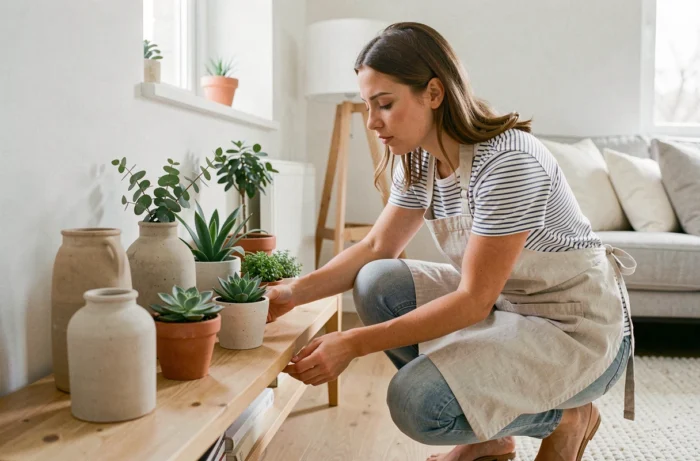
Arranging and decorating a home is about solving an equation between the available space, daily uses, and the chosen materials. Before thinking about colors or decorative objects, the first step is to analyze the flow in each room and identify underutilized areas.
Hierarchy of volumes: organize the space before decorating
Most interior design mistakes come from a common reflex: buying furniture and then trying to fit it in. The reverse approach works better. Mapping the flow of movement in each room helps identify the truly usable square meters, those that serve as transit, and those that remain unused.
In a living room, the sofa dictates the geometry of everything else. Placing it facing a load-bearing wall or perpendicular to the source of natural light radically changes the perception of the volume. A low piece of furniture (sideboard, console) positioned behind the sofa can create a visual separation from the dining area without closing it off.
For the kitchen, the principle of the activity triangle (sink, cooking surface, refrigerator) remains a reliable reference. If the distance between these three points exceeds a few steps, fatigue accumulates quickly in daily use. Bringing these elements closer together, even if it means moving a storage unit, improves comfort much more than a new countertop.
Specialized resources allow for a deeper exploration of these logics room by room, and everything about Athomedia.com covers these design topics with detailed thematic guides.
Color palette and natural light: two interconnected variables
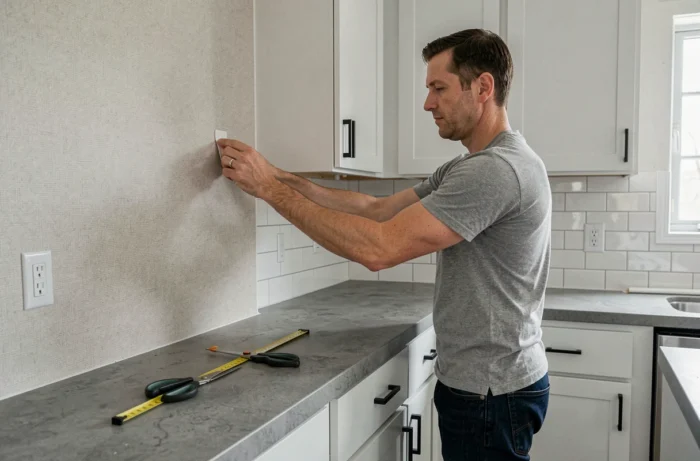
Choosing colors for your interior without considering the orientation of the windows often leads to disappointing results. A north-facing room receives cold, bluish light. Applying a light gray in such a space accentuates this coldness. In contrast, a warm beige or soft terracotta compensates for this deficit.
The color of a wall changes depending on the time of day and exposure. Testing a painted sample directly on the wall, observed morning and evening for two or three days, avoids the unpleasant surprises that a color swatch in-store may not reveal.
Combining shades and materials in the living room
The living room generally contains the highest number of decorative elements. To avoid visual cacophony, limiting the palette to three main colors (one dominant, one secondary, one accent) structures the whole. Textiles (cushions, curtains, rugs) serve as a binding element between the furniture and the walls.
Raw materials like linen, untreated wood, or natural stone add depth without overwhelming. These textures capture and diffuse light differently than a lacquered or synthetic surface, enriching the atmosphere of a room even with few decorative objects.
Multiplying light sources rather than watts
A single ceiling light in the center of a room flattens the volumes and creates shadowy areas in the corners. Distributing three to four light points (reading lamp, wall sconce, low-voltage string lights, table lamp) adds dimension.
- A table lamp near the sofa creates a warm island for reading without illuminating the entire room.
- Adjustable sconces allow directing light towards a textured wall or a painting, adding depth to the living room.
- Indirect lighting under a low piece of furniture or behind a shelf visually enlarges the floor space.
Sustainable decoration and second-hand: a reflex that has become structural
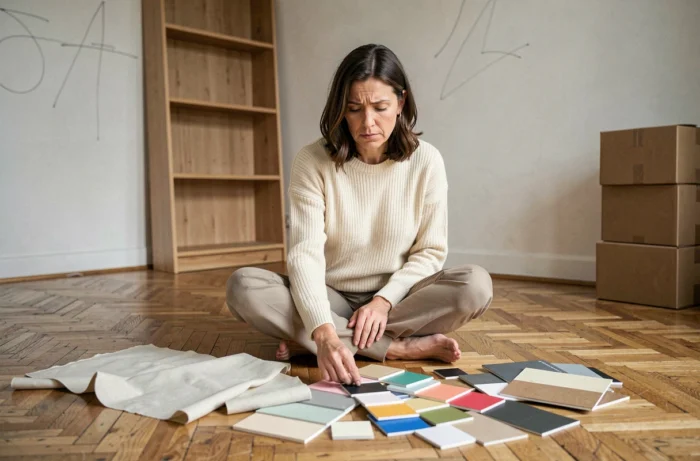
Interior decoration has undergone a fundamental change in recent years. The mix of new, second-hand, and upcycling has become a common purchasing mode, including for key furniture pieces like sideboards, tables, or armchairs.
Specialized platforms (Selency, home sections of LeBonCoin or Vinted) have made access to quality furniture simpler than a visit to a flea market. The rejection of “fast decor” (cheap items replaced each season) encourages prioritizing furniture designed to last, even if it means buying second-hand.
Integrating vintage pieces into a contemporary interior
A vintage piece does not require a retro decor to work. A single antique element in a clean-styled room is enough to create a focal point. A 1960s dresser in a minimalist bedroom, a gilded mirror in a white-tiled bathroom: the stylistic contrast adds character effortlessly.
Before purchasing, checking the sturdiness of the joints (drawers, hinges, legs) takes a few minutes and avoids costly restoration. Solid wood ages better than particle board, and a simple sanding followed by a vegetable oil can restore a tarnished surface to a like-new appearance.
Indoor plants and objects: balancing presence in each room
Plants contribute to decoration, but their placement also responds to practical constraints. A plant that needs direct light placed in a windowless hallway will not survive. Adapting the choice of plants to the actual brightness of each room ensures their survival and thus their decorative effect over time.
- Very bright rooms (south-facing living room): ficus, indoor olive, succulents, which can tolerate direct sunlight for several hours a day.
- Rooms with indirect light (bedroom, office): pothos, monstera, Boston fern, which tolerate partial shade.
- Humid rooms (bathroom): spathiphyllum, chlorophytum, which appreciate ambient humidity.
For decorative objects, the rule of odd numbers (grouping in threes or fives) creates a visually more dynamic arrangement than a symmetrical layout. Varying heights and materials within the same group (a ceramic vase, a brass candlestick, a small wooden frame) prevents a display case effect.

The last often overlooked lever is the floor. Changing or adding a rug in a living room or bedroom alters the acoustics, defines an area, and adds an extra layer of texture. A rug that is too small under a coffee table gives a floating impression, while a generous size that extends under the sofa visually anchors all the surrounding furniture.