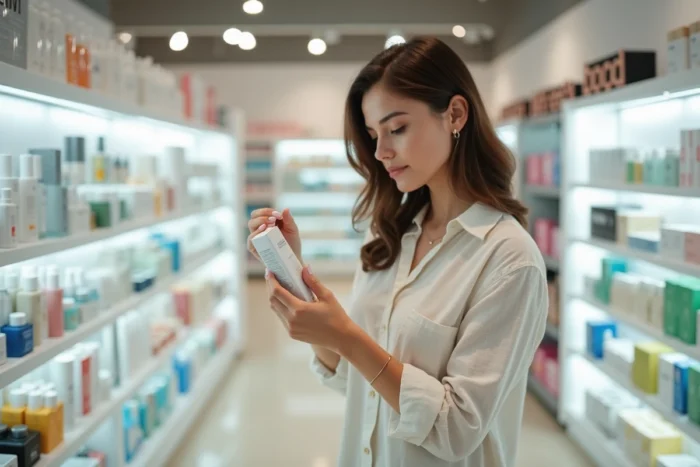
Nocibé distributes hundreds of cosmetic brands, from makeup to hair care. For a consumer who wants to avoid products tested on animals, the question is not about Nocibé as a retailer, but about what each brand sold on the shelf actually guarantees. The distinction between distributor and manufacturer changes the entire analysis.
Nocibé as a distributor and cruelty-free labels: what the reseller status implies
Nocibé is not a cosmetics manufacturer. The retailer buys and resells products designed by third-party brands. A distributor does not control the testing protocols of its suppliers, unless it imposes a specific set of requirements, which Nocibé has never publicly claimed.
A detailed file on Nocibé cruelty-free and animal testing provides a better understanding of what the retailer communicates (or does not communicate) on the subject.
In practice, Nocibé’s catalog mixes brands certified by independent organizations and others that do not claim any label. Therefore, the consumer must check brand by brand, product by product. Assigning Nocibé a global “cruelty-free” status makes no technical sense.
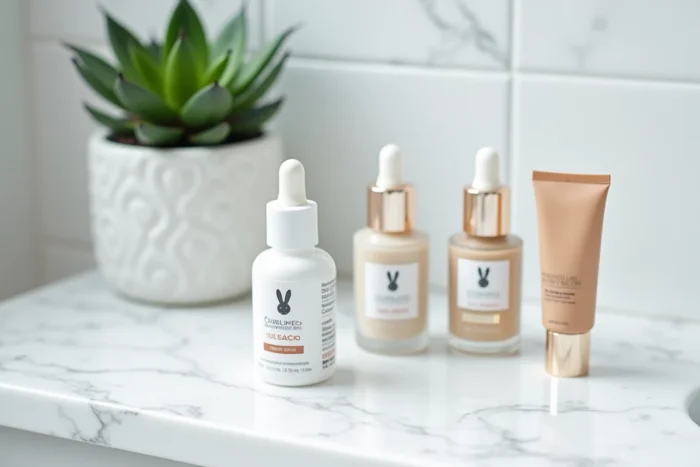
Comparison of recognized cruelty-free labels in Europe
Not all “cruelty-free” logos are created equal. Some require an independent audit, while others rely on a simple declaration from the manufacturer. The table below summarizes the criteria of the main labels found on products sold at Nocibé or its competitors.
| Label | Organization | Independent Audit | Ban on suppliers testing on animals | Vegan included |
|---|---|---|---|---|
| Leaping Bunny | Cruelty Free International | Yes | Yes, throughout the supply chain | No (separate option) |
| PETA Beauty Without Bunnies | PETA | No (self-declaration) | Yes, signed commitment | Distinct “vegan” option |
| Choose Cruelty Free (CCF) | CCF Australia | Yes | Yes | No |
| One Voice | One Voice France | Yes | Yes | No |
Leaping Bunny remains the strictest reference because it imposes control over the entire supply chain, including subcontractors who manufacture raw materials. PETA relies on a declarative commitment from the manufacturer, without systematic on-the-ground verification.
When a brand sold at Nocibé displays the Leaping Bunny logo, the guarantee is more robust than when it only shows a generic rabbit pictogram without an identifiable certifying organization.
European regulation on animal testing in cosmetics: where do we really stand
The European Union has prohibited since 2013 the marketing of cosmetics whose finished product or ingredients have been tested on animals for cosmetic purposes. This ban covers manufacturing and importation.
The nuance that escapes most articles on the subject lies in the overlap of regulations. An ingredient can be tested on animals under another regulation (REACH for chemical substances, for example) without constituting a violation of the European cosmetic regulation. The European Commission clarified in 2023 that tests imposed by other regulatory frameworks do not automatically trigger the same legal effects as a test conducted for cosmetic use.
The European Commission published on June 1, 2026, a roadmap to reduce and then gradually eliminate animal testing in chemical safety assessment, with a follow-up timeline until 2029. This roadmap covers 15 regulatory areas, from pesticides to biocides to certain medications.
This is not an immediate ban. This document serves as a soft law instrument: concrete obligations will depend on future legislative proposals and the validation of alternative methods. For the consumer, this means that the European framework is progressing, but a product sold in Europe is not necessarily “zero animal testing” in the absolute sense.
How to check if a product sold at Nocibé is truly not tested on animals
Rather than relying on the retailer’s claims, three concrete checks can help make a decision:
- Look for a Leaping Bunny or One Voice logo on the packaging with the certification number. A generic rabbit drawn by the brand itself does not constitute proof.
- Consult the database of Cruelty Free International or the PETA online list, then cross-reference with the exact name of the brand (not the parent company, which may own certified brands and others that are not).
- Check if the brand sells in mainland China. Chinese regulations have long imposed animal testing for imported cosmetics. Since 2021, exemptions exist for certain “ordinary” products, but so-called “special” cosmetics remain subject to mandatory animal testing in China.
This last point is often the most reliable distinguishing criterion. A brand that chooses to sell “special” products in mainland China cannot, under the current state of Chinese regulation, guarantee the complete absence of animal testing.

Nocibé and transparency: what the consumer is missing
The retailer does not offer a “cruelty-free” filter on its online sales site, unlike some competitors who allow sorting products by label or certification. The absence of a filter forces the consumer to do their own research for each reference.
Nocibé also does not publish a consolidated list of certified brands that it distributes. In the absence of this transparency, labeling the retailer as “cruelty-free” is more of a marketing shortcut than a verifiable reality.
The answer to the initial question therefore entirely depends on what one buys on the shelf. The retailer itself does not test anything, as it does not manufacture. The brands it distributes apply very different policies. The manufacturer’s label, not the store’s name, remains the only reliable indicator.