
The reliability of an online delivery service is not measured by the promise displayed on the cart page. It is verified within the legal framework that governs the seller’s liability, the compensation limits of the carrier, and the actual logistical architecture of the last mile. Understanding these mechanisms allows one to distinguish a structured delivery service from a simple ordering interface.
Carrier compensation limits: what online delivery can actually guarantee
The general terms and conditions often promise a “guaranteed” delivery. In practice, the financial coverage in case of loss, damage, or delay is still governed by strict limits set by the Commercial Code. For shipments under 3 tons, the compensation is capped at 33 euros per kilogram, not exceeding 1,000 euros per package. Beyond 3 tons, the cap drops to 20 euros per kilogram, calculated on the gross weight.
These amounts do not cover the actual market value of many products ordered online. An electronic device, a lot of branded clothing, or professional equipment easily exceed these thresholds. Taking out an ad valorem insurance becomes the only leverage to secure the shipment.
We recommend systematically checking if the delivery service offers an additional insurance option at the time of ordering. The absence of this option is a weak signal regarding the reliability level of the provider. Knowing how www labonne livraison fr works helps identify this type of parameter before finalizing a purchase.
Legal liability of the seller in case of non-delivered packages
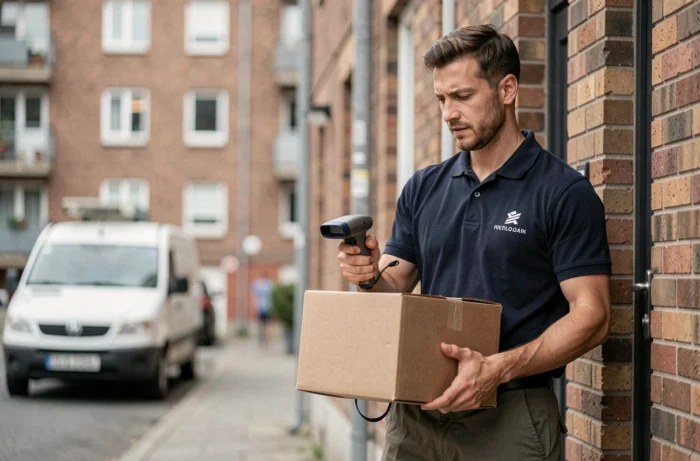
One point that most online buyers are unaware of: the seller remains solely responsible to the customer until the package is received. Invoking a carrier’s failure is not a defensible argument against the consumer. The Consumer Code requires the seller to deliver the goods on the agreed date or within the agreed timeframe, and failing that, within a reasonable time.
If delivery does not occur, the customer is entitled to demand a full refund. The seller must then take action against their logistics provider to recover the amounts paid. This mechanism alters the understanding of a reliable delivery service: the strength of the contractual link between the merchant and their carrier directly conditions the quality of service perceived by the end customer.
For a buyer, reliability is therefore verified upstream. A site that clearly displays its delivery times, its recourse methods, and its refund conditions demonstrates a mastery of this chain of responsibility.
Network of pickup points and lockers: reliability of the last mile
Home delivery still generates the highest failure rate on the first attempt. The absence of the recipient, address errors, and overly broad time slots multiply attempts and extend actual delays. Automated lockers significantly reduce the rate of lost packages by removing the human variable from the last meter.
The expansion of locker networks in France illustrates this shift. Mondial Relay has grown from about 300 lockers in 2021 to over 10,000 in 2025. This densification transforms the criteria for choosing a reliable delivery method:
- Extended hourly availability, often 24/7, compared to limited time slots for home delivery
- Less dependence on individual delivery routes, which limits delays related to seasonal overload
- Enhanced traceability through a unique code, with immediate notification to the customer upon package drop-off
The classic pickup point remains relevant in areas with low locker density, but the logistical trend clearly favors automated lockers for high-volume e-commerce.
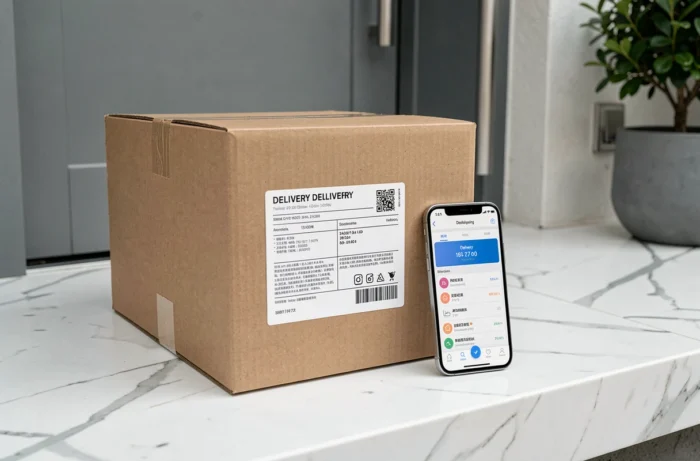
Concrete criteria for evaluating an online delivery service
The marketing promise of “fast and reliable delivery” is not enough. We observe that truly effective services stand out based on specific technical criteria that the ordering interface does not always highlight.
- Transparency regarding the carrier used: a reliable service indicates the name of the logistics provider before order validation, not after
- Package tracking with real-time updates, including sorting hub passages and not just the status “out for delivery”
- Documented complaint policy with precise processing times, ideally within 48 working hours
- Options for rescheduling delivery or redirecting to a pickup point at no additional cost
A service that offers multiple carriers based on geographical area or product type adopts a multi-carrier strategy. This approach improves resilience against peaks in activity and local disruptions.
Announced delivery time and actual delivery time
The time displayed at the time of purchase corresponds to the shipping time, rarely to the total time. The order preparation time is systematically added and can represent one to several working days depending on the seller’s logistical organization. A reliable delivery service clearly distinguishes these two stages in its terms of sale.
Real-time order tracking allows verification of whether the package has actually been handed over to the carrier. A recurring discrepancy between the announced shipping date and the actual pickup date by the carrier indicates an internal organizational problem with the seller, not with the delivery service itself.
The reliability of an online delivery service is based on legal, logistical, and contractual foundations that user experience alone does not reveal. Compensation limits, the seller’s legal liability, and the densification of automated locker networks are the three structuring axes to master, whether one is a buyer or a merchant.