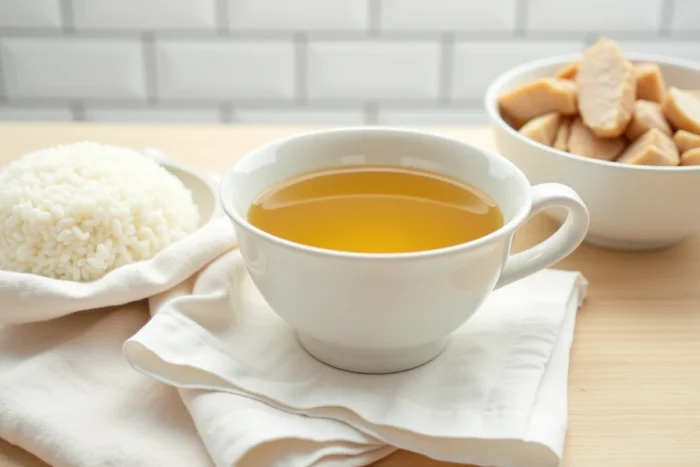
The low-residue diet is not just about eating crackers and broth for three days. An effective colonic preparation relies on specific dietary choices that maintain protein and energy intake while gradually emptying the colon. Here, we detail concrete nutritional levers to get through this period without cravings or fatigue.
Lean proteins and refined starches: the foundation of a satisfying low-residue diet
Satiation primarily depends on protein intake and caloric density per meal. In a low-residue diet, lean proteins are the hunger-fighting pillar: chicken breast, turkey, white fish (hake, cod, sole), well-cooked eggs. These protein sources leave almost no residue in the colon and slow gastric emptying, prolonging the feeling of fullness.
Refined starches complement this foundation. White rice, white pasta, peeled cooked potatoes, and white bread provide carbohydrates that are quickly absorbed by the small intestine. Peeled cooked potatoes, often overlooked, appear in several hospital preparation sheets for colonoscopy and offer better satiety than plain white rice alone.
The combination of lean protein and white starch at each meal allows for the creation of complete plates. We recommend consulting the satisfying menu proposed by Pharmidea to visualize how to structure these combinations over several days without excessive monotony.

Adapting the diet before colonoscopy in case of diabetes
Recent recommendations emphasize a point that most consumer guides overlook: in diabetic patients, the standard low-residue diet can cause hypoglycemia. The removal of fiber accelerates carbohydrate absorption, which can dramatically alter the glycemic profile.
For a patient on insulin or sulfonylureas, switching to clear liquids the day before the exam represents the riskiest phase. Splitting intake into five or six smaller portions rather than three traditional meals helps smooth the glycemic curve. Broths enriched with a small amount of fine semolina, allowed in the strict low-residue diet, provide a minimum of regular carbohydrates.
The gastroenterologist and the diabetologist must be informed simultaneously to adjust treatment doses. This is not a detail of organization; it is a safety condition.
Recipes compatible with a low-residue diet
Dietary monotony remains the primary factor for abandonment or inappropriate snacking before a colonoscopy. Varying cooking methods and allowed seasonings changes the game.
Potato and chicken breast soup
Cook peeled potatoes in filtered chicken broth, add poached chicken breast pieces, then partially blend. The result is a thick protein-rich soup that sustains the body much better than a simple clear broth. Season with salt, white pepper, and a knob of butter.
Cheese omelet
Beaten eggs cooked as an omelet with grated Gruyère or Emmental make for a quick and satisfying meal. Hard cheeses are allowed in a low-residue diet as they contain almost no lactose or fiber. Serve with toasted white bread.
White pasta with steamed fish
Steamed cod fillet, flaked over al dente white pasta, with a drizzle of olive oil and lemon. This dish provides proteins, carbohydrates, and fats without any problematic residue.
- Fresh herbs (parsley, chives) are generally excluded from the strict diet, but dried herbs in very small quantities remain tolerated in most hospital protocols
- Butter, fresh cream, and vegetable oils are allowed and can increase caloric density without adding fiber
- Fruit compotes without chunks or skin (apple, quince) provide a sweet touch compatible with the diet and complete dessert
Dairy products and calcium during colonic preparation
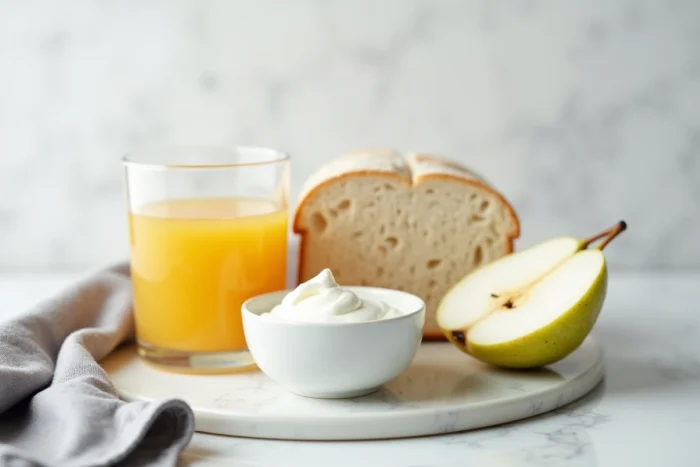
Plain yogurt, cottage cheese, and cooked pressed cheeses remain valuable allies. They maintain calcium and protein intake while being perfectly compatible with the low-residue diet. A plain yogurt between meals curbs hunger more effectively than filtered fruit juice, thanks to its casein content.
Non-fiber enriched plant milks (almond, rice) can replace cow’s milk if lactose intolerance complicates preparation. Check for the absence of thickeners like guar gum or carrageenan, which are technically soluble fibers.
Hydration and management the day before the exam
The switch to clear liquids, usually the day before the colonoscopy, remains the most challenging phase in terms of hunger. Anticipating this step from the day before by gradually increasing the proportion of liquids in the diet (smooth blended soups, enriched broths) makes the transition less abrupt.
- Still or sparkling water without limit, to be spread throughout the day
- Filtered meat or vegetable broths, properly salted to compensate for losses related to colonic preparation
- Light tea, herbal teas without chunks, coffee without milk or cream on the day of the switch to clear liquids
- Transparent jellies (like filtered quince jelly) to provide a minimum of sugars and limit the feeling of gastric emptiness
Drinking regularly in small amounts rather than large spaced gulps reduces the feeling of bloating while maintaining sufficient gastric volume to alleviate hunger. The evening before, after taking the preparation solution, most protocols impose complete fasting. This constraint is non-negotiable, but the hours preceding it can be optimized with sweet clear liquids if the patient’s metabolic profile allows.
A well-structured low-residue diet, with complete meals combining lean proteins, white starches, and suitable dairy products, significantly reduces the feeling of deprivation. The quality of colonic preparation does not suffer, provided that the list of allowed foods provided by the endoscopy center is strictly followed.