
When watching an episode of 4 Weddings and a Honeymoon on TF1, you see white dresses, judgments among contestants, and a friendly competition. What you don’t see is what happens after the end credits. Divorce in this show remains a topic that the production never highlights, but viewers always end up discovering it through social media or a gossip article.
Pressure of Filming and Fragility of Contestant Couples
Participating in a television show to have your wedding rated by strangers is not a trivial test for a couple. We’re talking about a context where every detail of the big day (dress, caterer, decoration, ceremony) is exposed to a jury of four women whose comments are edited to create entertainment.
Feedback varies on this point, but several former contestants have mentioned on social media the gap between their real experience and what the editing portrayed. The stress of filming adds to the stress of the wedding itself, and this double pressure can reveal pre-existing tensions in the couple.
It is noted that for some participants, the television competition transforms an intimate moment into a public performance. The wedding ceases to be a private commitment and becomes an evaluated product. When you read testimonials about divorce in 4 Weddings and a Honeymoon, you understand that this mechanism weighs far beyond the filming.

Divorce Rate in France and Romantic Illusion on Television
The program portrays marriage as an achievement, a perfect celebration to reach. The statistical reality tells a different story. According to data from INSEE cited by TF1 Info, the divorce rate in France in 2021 reached 4.9 divorces per 1,000 married people.
An article from programme.tv on the popularity of wedding formats on television reminds us that 44% of marriages end in divorce. Contestants on the show are no exception to this structural trend, even though the program prefers to showcase smiles and bouquet tosses.
The gap between the television staging and the actual likelihood of breakup creates what could be called a narrative dissonance. We watch couples get married knowing, statistically, that nearly one in two couples will eventually separate. The show does not lie, but it deliberately focuses on the romantic exception.
Filmed Wedding Budget and Risk of Breakup
A rarely discussed angle in conversations about the show concerns the link between the cost of the wedding and the stability of the couple. Recent academic research, including a study by economists Andrew Francis-Tan and Hugo Mialon published in Economic Inquiry, shows that the more expensive a wedding is, the higher the risk of divorce.
In the context of 4 Weddings and a Honeymoon, the competition pushes contestants to impress. There are regularly significant budgets for weddings designed as showcases. The scoring criteria (dress, meal, atmosphere, venue) encourage decorative and financial excess.
What Excess Produces in Practice
- Post-wedding debt that generates financial conflicts within the couple, the primary cause of marital disputes
- A gap between the dream wedding for the camera and the real daily life that follows, a source of rapid disillusionment
- Increased family pressure when relatives have seen the wedding broadcast on television and judge the aftermath against the spectacle
The average budget for a wedding in France is around 20,000 euros according to several media sources. Television weddings often exceed this average, precisely because the competitive format rewards excess.
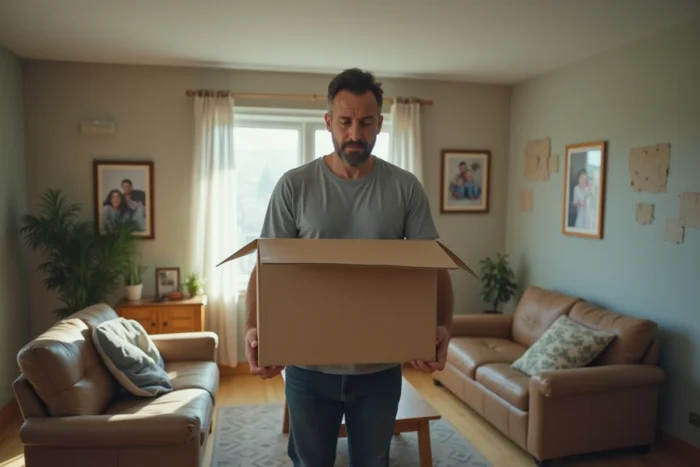
After the Broadcast: When Local Fame Complicates Separation
The effect of television broadcasting on the couple’s life in the following months is often underestimated. Contestants of 4 Weddings and a Honeymoon are not celebrities, but they become temporarily recognizable in their wider circle.
When a divorce occurs after airing, the separation is experienced under the gaze of people who saw the wedding on television. Colleagues, neighbors, distant acquaintances have opinions about the couple. This local exposure transforms a private procedure into a semi-public event.
The Weight of Social Media After Filming
Former contestants remain identifiable long after the broadcast. A simple tag on Instagram or a comment on Facebook is enough to revive the episode. For a couple going through a separation, this permanent digital trace represents an additional psychological burden.
Forums and Facebook groups dedicated to the show regularly comment on breakups. There are discussions where viewers judge former contestants with the same criteria as during the show: the dress was too expensive, the groom didn’t seem convinced, the mother-in-law was going to be a problem.
- Online comments prolong the television judgment long after the season ends
- Some contestants have deleted their social media accounts after their separation to escape the remarks
- The production does not offer follow-up or support to participants post-broadcast
The show’s format relies on peer judgment. This mechanism does not stop when the cameras turn off. The gaze of others, amplified by television, weighs on couples already weakened. Divorce in 4 Weddings and a Honeymoon is not an isolated phenomenon: it reflects national statistics, exacerbated by a context of media exposure that most couples did not anticipate.