The French used car market is worth more than three times that of new cars. The 2025 public data from the ministry reports 5.534 million sales of used passenger cars compared to 1.665 million new cars. Buying used is no longer a default choice; it is the majority path.
With this volume of transactions, the risks of encountering a problematic vehicle increase proportionally. The involvement of an external technical perspective changes the game on several points that traditional guides rarely address.
Battery health in used electric vehicles: the new purchasing criterion
Used electric vehicles are gaining ground in France, with a significant increase in registrations in 2025. This rise changes the usual framework for evaluation. For a thermal vehicle, mileage and the maintenance log are sufficient to gauge mechanical wear. For an electric vehicle, it is the residual capacity of the battery that determines the vehicle’s actual value.
An independent automotive expert with diagnostic tools can measure the SOH (State of Health) of the battery. This percentage indicates the remaining capacity compared to a new state. Two identical vehicles with the same mileage can show very different SOH based on charging and storage conditions.
Professionals listed on monconseillerautomobile.com now incorporate this battery diagnosis into their inspections, which avoids relying solely on the range displayed on the dashboard, which is often optimistic.

Ecological penalty 2026 and administrative origin of the vehicle
The ecological penalty for 2026 extends to imported used cars but not to vehicles already registered in France. This distinction can cost several hundred euros to the unsuspecting buyer. The administrative origin of the vehicle is as important as its age in anticipating registration fees.
A vehicle purchased in Germany or Belgium and then re-registered in France will be subject to the current penalty scale, even if it is several years old. In contrast, a vehicle already in the French registration database escapes this tax during a simple change of ownership.
What an expert should check before the transaction
An independent automotive advisor systematically checks the country of first registration via the registration certificate and the HistoVec report. This step allows for precise calculation of the total acquisition cost, including penalties, before any price negotiation.
- Check if the vehicle was imported or registered in France from the start, to anticipate the potential application of the 2026 penalty
- Verify the consistency between the VIN, the registration document, and the HistoVec report to detect any possible odometer rollback
- Examine the history of technical inspections and declared accidents, as a severely damaged vehicle that has been repaired loses structural reliability
Resale value and regulatory constraints on thermal vehicles
Taxation and usage rules are tightening in 2025-2026 for thermal vehicles, particularly for company fleets and low-emission vehicles. This regulatory pressure directly affects the resale market for individuals.
Some older diesel models or those with high emissions are gradually being excluded from low-emission zones (LEZ) in major urban areas. A vehicle banned from circulation in your area loses part of its value and its everyday usability. An automotive expert asks the question before purchase: will the vehicle still be usable in two or three years where you live?
Conversely, recent hybrid models and low-emission small thermal vehicles maintain a better value. Regulatory anticipation weighs as much as mechanical condition in calculating a good deal.
Independent technical inspection: what escapes conventional checks
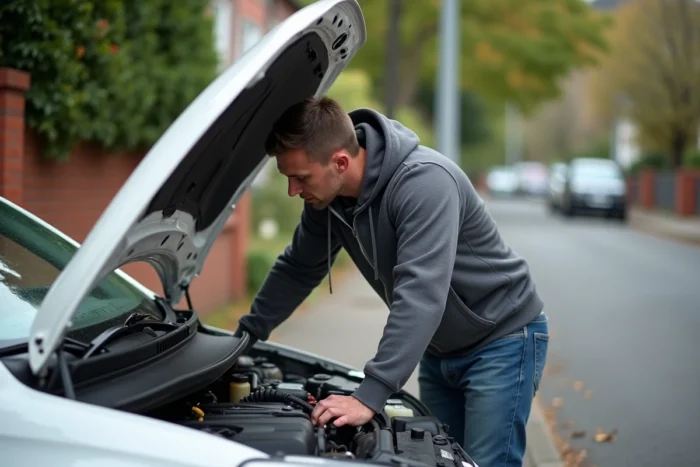
The mandatory technical inspection checks a number of regulatory points, but it does not provide a complete diagnosis of the vehicle’s actual condition. A favorable inspection does not mean the car is in good condition. It means it meets the minimum thresholds set by regulations.
The blind spots of the technical inspection
An independent expert inspects elements that the technical inspection does not cover or only briefly addresses:
- The condition of the gearbox (automatic or manual), while driving at different speeds to detect jerks, slips, or abnormal noises
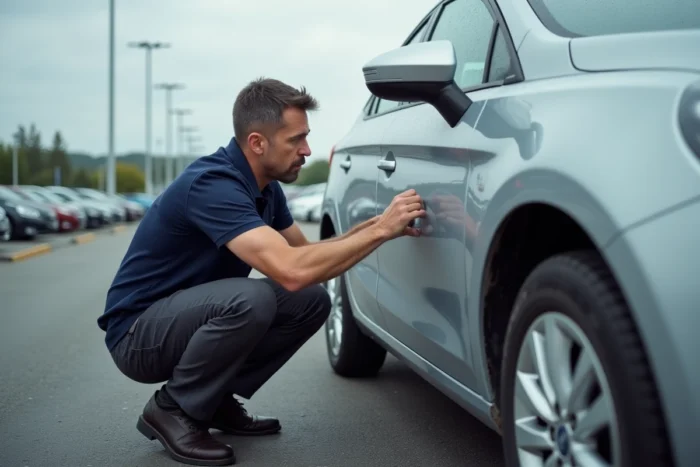
- The quality of paint repairs and welds, which may indicate a past accident not declared in the HistoVec report
- The actual wear of the running gear (ball joints, bushings, drive shafts), whose replacement often represents a significant budget on premium models
- The operation of all electronic equipment (parking assistance, camera, adaptive cruise control), which frequently fails on vehicles over five years old
A favorable technical inspection does not guarantee the absence of significant costs in the months following the purchase. The independent inspection bridges the gap between regulatory compliance and actual condition.
Written report and negotiation leverage
The expert provides a detailed report listing the identified defects, along with, when possible, an estimate of the repair costs. This document is directly used in negotiating the sale price. A seller confronted with a factual report is more likely to accept a discount than when faced with a subjective impression from the buyer.
The French used car market absorbs several million transactions between individuals each year, without any technical intermediary. Involving an independent expert before signing remains the only safety net that does not depend on the seller or the listing platform. The cost of this inspection represents a fraction of the vehicle’s price, and in most cases, the negotiation achieved thanks to the report more than covers the fees.